
Top 15 Effective SEO Strategies to Drive Organic Growth

SEO strategies are the comprehensive plans and actions we implement to improve a website’s visibility in search engine results. At The Design Firm, we combine search engine optimization services, technical SEO, content strategy, off-page SEO, and data-driven analysis to help businesses attract more qualified organic traffic and turn search visibility into measurable business growth.
Simply publishing content and adding keywords is no longer enough. Search engines have become significantly better at understanding search intent, content quality, website architecture, user experience, and the overall relevance of a website.
At our agency, we focus on building SEO strategies around your business goals rather than following a generic checklist. Whether you need more leads, e-commerce sales, local visibility, brand awareness, or long-term organic growth, we develop a strategy around what your customers are actually searching for and what your business needs to achieve.
Key Takeaways
- Effective SEO requires a combination of content, technical optimization, authority building, and continuous analysis.
- Understanding search intent is one of the first steps we take when developing an SEO strategy.
- High-quality content should satisfy the user’s needs rather than simply being written to reach a particular word count.
- Keyword research helps us identify valuable search opportunities and map them to the right pages.
- Internal linking helps users and search engines discover and understand related content across your website.
- High-quality backlinks should be earned through useful content, digital PR, relationships, and genuine authority rather than artificial link schemes.
- Technical SEO provides the foundation for crawling, indexing, and delivering a reliable experience across devices.
- Core Web Vitals are important, but we never treat page speed as the only factor responsible for rankings.
- Modern SEO also needs to account for AI-powered search experiences such as Google AI Overviews and AI Mode.
- We measure SEO success through meaningful business outcomes such as qualified traffic, leads, conversions, rankings, visibility, and revenue.
Table of Contents
What Are SEO Strategies and Why Do They Matter?
As a leading digital marketing agency, we know that simply having a website is not enough. Your potential customers are already searching for products, services, solutions, and information online. If your business is difficult to find when those searches happen, you are missing valuable opportunities.
This is where a well-planned SEO strategy becomes important.
SEO is not about finding shortcuts or trying to manipulate search engines. It is about making your website easier for search engines to crawl, understand, and index while providing genuinely useful information and a better experience for your audience.
Google itself recommends creating helpful, reliable, people-first content and making it easier for search engines to discover and understand your pages.
At The Design Firm, we therefore look at SEO as a complete growth process. We analyze your website, competitors, target audience, search demand, existing rankings, technical performance, content, backlinks, and conversion opportunities before deciding which SEO strategies should be prioritized.
This allows us to focus resources on activities that have the greatest potential to improve your organic visibility and business performance.
On-Page SEO Strategies
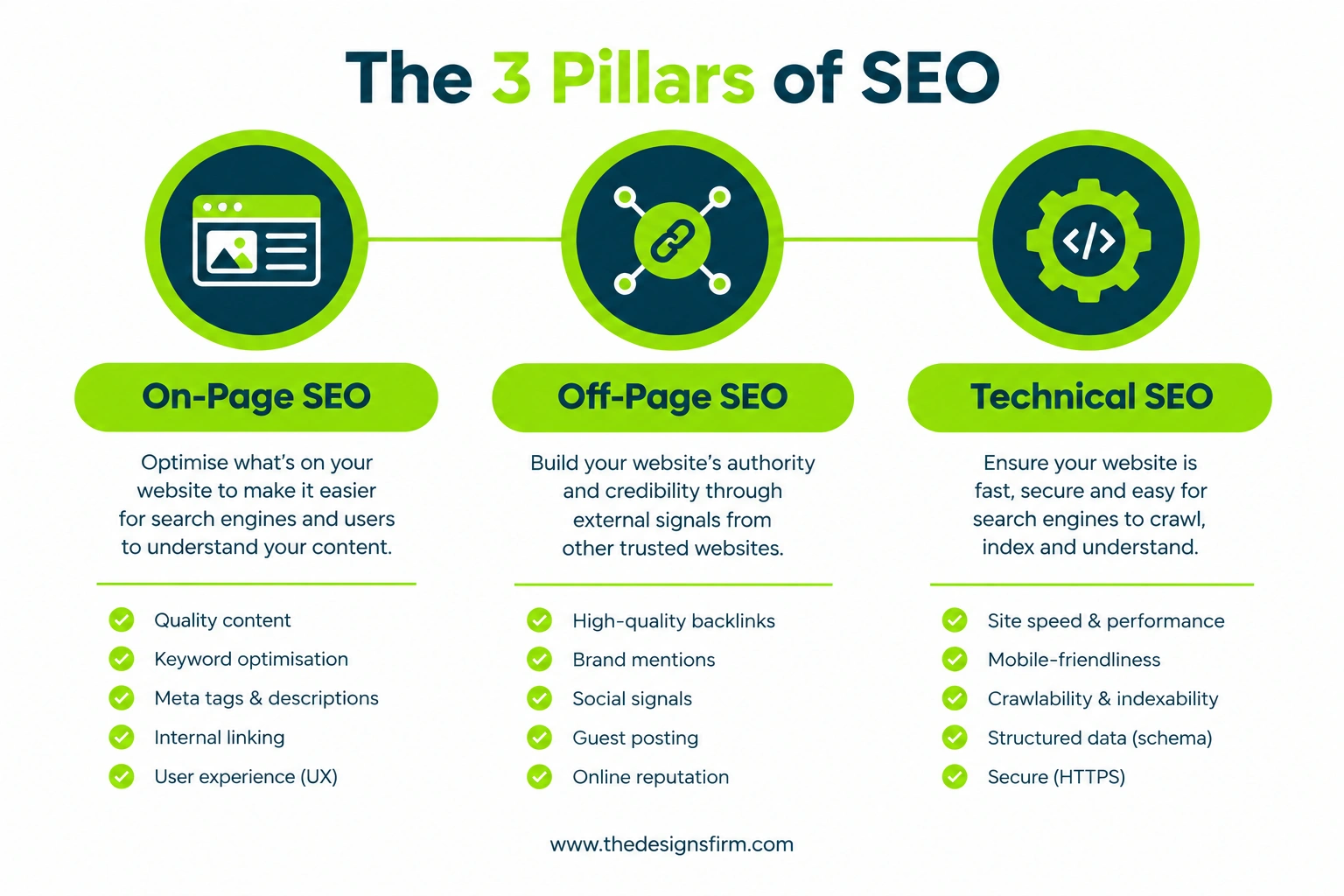
On-page SEO includes the actions we take directly on your website to improve relevance, usability, and search visibility. These are some of the areas where we have the greatest control over the outcome.
If you are looking for professional support, our on-page SEO services are designed to optimize important website elements while maintaining a natural experience for users.
1. Create High-Quality, Helpful Content
Content remains one of the most important parts of a successful SEO strategy, but the old approach of simply publishing long articles stuffed with keywords is no longer enough.
At our agency, we focus on SEO writing that genuinely answers the questions your audience is asking.
We do not recommend writing a 3,000-word article simply because a competitor has written 3,000 words. Google has explicitly stated that there is no preferred word count for ranking.
Instead, we focus on:
- Understanding the search intent behind the query
- Covering the important aspects of a topic
- Providing original information, examples, research, or analysis where possible
- Demonstrating relevant expertise and experience
- Making the content easy to read and navigate
- Keeping important information accurate and up to date
- Including appropriate calls to action where commercial intent exists
For example, an e-commerce product page should help users evaluate the product, while a service page should explain the service, its benefits, process, applications, and reasons to choose the provider.
We also review older content regularly. Updating outdated statistics, removing inaccurate information, improving structure, adding missing sections, and aligning content with current search intent can give existing pages a new opportunity to perform.
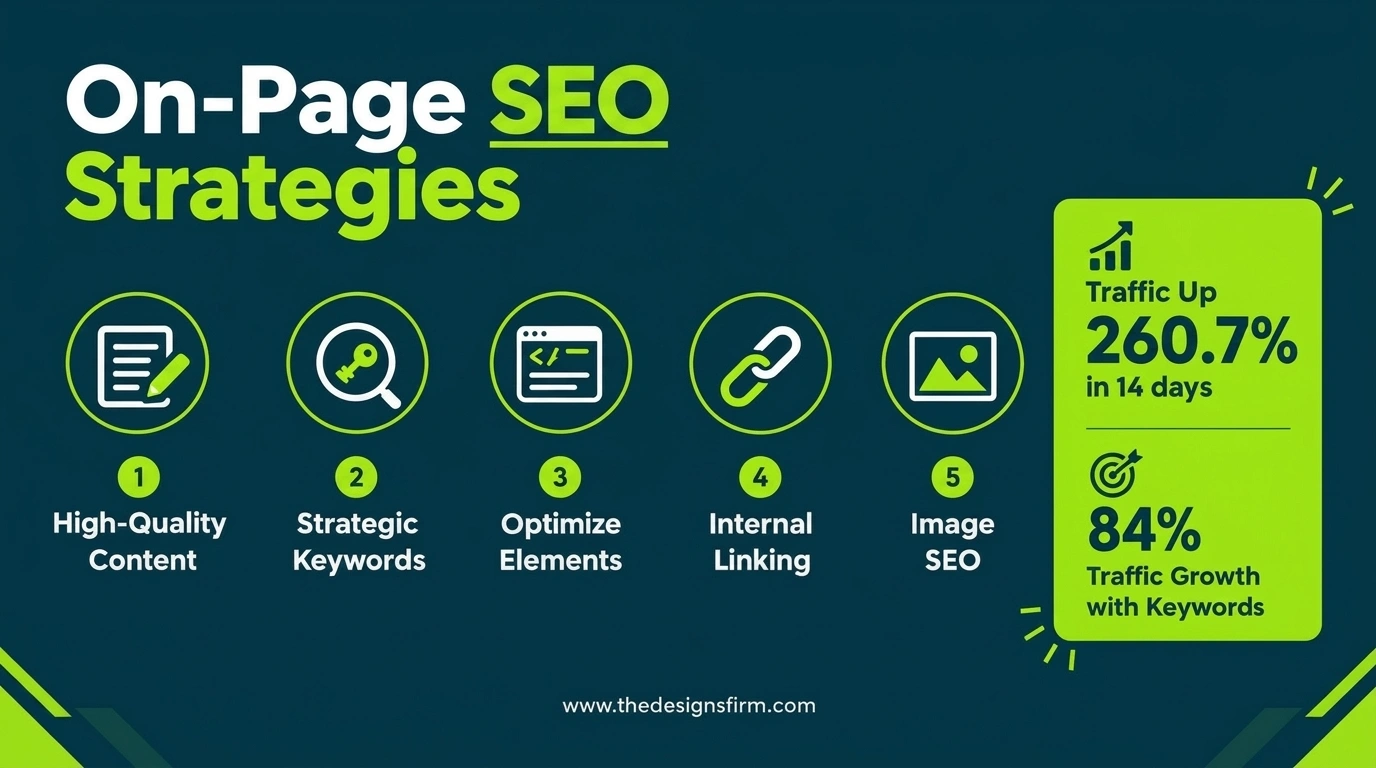
One well-known example comes from Backlinko’s Content Relaunch case study. After updating and relaunching an existing page, Brian Dean reported a 260.7% increase in organic traffic in 14 days. The example demonstrates why updating valuable existing content can sometimes be more effective than continually publishing new pages.
2. Conduct Strategic Keyword Research and Targeting
You cannot build an effective SEO strategy without understanding what your potential customers are searching for.
Our keyword research services go beyond looking at search volume. We analyze the intent, competition, relevance, commercial value, SERP features, and the type of content already ranking.
We generally look at:
- Informational keywords
- Commercial investigation keywords
- Transactional keywords
- Navigational or branded searches
- Long-tail queries
- Location-based searches
- Product and service variations
- Questions and problem-based searches
- Competitor keyword opportunities
We also analyze the search results themselves.
For example, if Google consistently displays product pages for a particular keyword, creating a generic blog post may not satisfy the same intent. Likewise, if the SERP is dominated by detailed guides, a thin commercial page may struggle to compete.
Our goal is to map the right keyword opportunities to the right pages instead of forcing multiple unrelated keywords onto one URL.
Semrush has published multiple case studies demonstrating the value of research-led SEO. In one case, Reviewed increased organic traffic by 84%, increased ranking keywords by 51%, and grew the number of keywords ranking in Google’s top three from 6,000 to 13,000.
This is why we treat keyword research as a strategic process rather than simply exporting a list of keywords from an SEO tool.
3. Optimize Key On-Page SEO Elements
Once we understand the target search intent and keywords, we optimize the page itself.
This includes:
Title Tags
We create unique, descriptive, compelling title tags that accurately represent the page. Where appropriate, we incorporate the primary search term naturally rather than forcing keywords into every title.
Meta Descriptions
Meta descriptions are not a direct Google ranking factor, but a useful description can help users understand what a page offers before clicking.
We therefore write them for users rather than treating them as keyword containers.
Headings
We use H1, H2, H3, and other headings to create a logical content hierarchy.
A single H1 is not a strict Google requirement, but a clear heading structure can make the page easier for users and search engines to understand.
URLs
We recommend short, descriptive URLs that clearly communicate what the page is about.
Where appropriate, relevant words can be included in the URL, but we avoid unnecessary parameters, excessive keyword repetition, and complicated structures.
Content Structure
We also optimize paragraphs, lists, tables, images, calls to action, FAQs, and other page elements according to the search intent and purpose of the page.
Our on-page SEO process is designed to make each important page clearer, more relevant, and more useful.
4. Create a Logical Internal Linking Structure
Internal links connect one page on your website to another.
At our agency, internal linking is an important part of both SEO and website usability. We use contextual internal links to help users discover related information and help search engines understand how different pages on your website are connected.
A strong internal linking strategy can help us:
- Discover important pages
- Improve website navigation
- Establish relationships between related topics
- Support important commercial pages
- Distribute internal link equity
- Strengthen topical relationships
- Reduce the number of important pages that are difficult to reach
We do not simply add links wherever possible.
We focus on relevance, context, descriptive anchor text, and the importance of the destination page.
Google also recommends linking to relevant resources and using descriptive anchor text so that users and search engines can better understand where the link leads.
For larger websites, we can also identify orphan pages, pages with very few internal links, and opportunities to strengthen important URLs through contextual links from established pages.
5. Master Image SEO
Images contribute to both user experience and search visibility.
At The Design Firm, we optimize images as part of the wider on-page and technical SEO process rather than treating them as an afterthought.
Our image optimization process can include:
- Using descriptive and meaningful file names
- Writing useful alt text where appropriate
- Compressing images
- Selecting suitable image formats
- Using appropriately sized images
- Implementing responsive images
- Improving image loading performance
- Placing relevant images close to related content
- Optimizing image landing pages where image search visibility matters
Alt text should describe the image accurately and help users who rely on screen readers. We do not recommend stuffing keywords into alt attributes where those keywords do not naturally describe the image.
For example, instead of:
best-seo-agency-karachi-seo-services-seo-company.jpg
we would prefer a descriptive file name such as:
seo-strategy-meeting.jpg
where that accurately represents the image.
Google’s own SEO documentation also recommends using high-quality images near relevant text and making images understandable to both users and search engines.
Off-Page SEO Strategies
Off-page SEO includes activities outside your own website that can influence visibility, reputation, discovery, and authority.
At our agency, we focus on earning relevant authority rather than using artificial link-building techniques.
Our off-page SEO services can include strategic link building, digital PR, content promotion, brand visibility, competitor backlink analysis, and outreach.
6. Earn High-Quality, Relevant Backlinks
Backlinks remain an important part of SEO, but the quality and relevance of links matter more than simply collecting large numbers of backlinks.
We focus on earning links from websites that are relevant, trustworthy, editorially appropriate, and capable of sending meaningful referral traffic.
Our link-building strategies can include:
- Digital PR
- Data-driven content
- Original research
- Expert contributions
- Relevant resource pages
- Industry publications
- Relationship-based outreach
- High-quality guest contributions where editorially appropriate
- Unlinked brand mention opportunities
We do not recommend creating backlinks simply because a website offers a link.
Google specifically warns against link schemes, including excessive reciprocal linking and buying or selling links for ranking purposes.
That is especially important when dealing with forced link exchanges such as “you link to me and I will link to you”. The objective should be to build genuine authority and useful relationships rather than manufacture ranking signals.
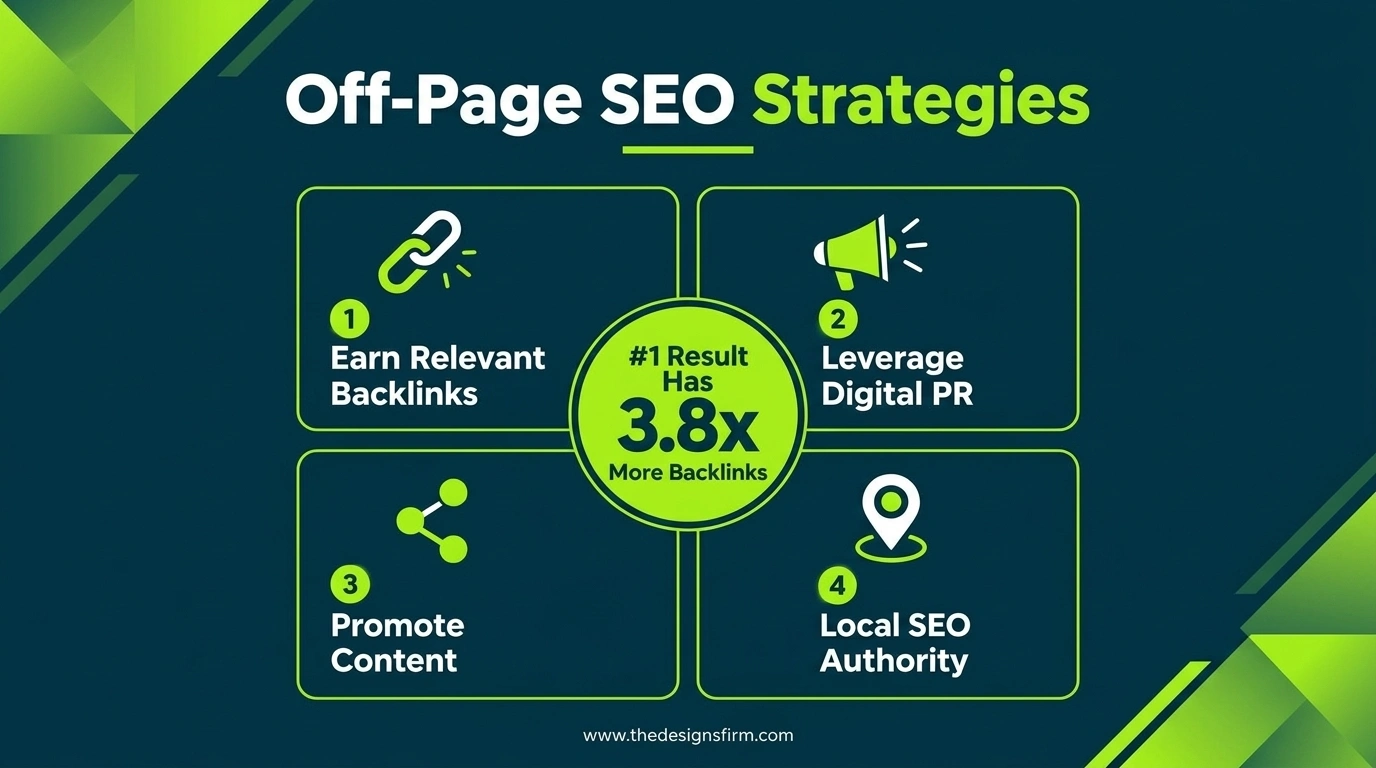
Backlinko’s analysis of 11.8 million Google search results found a strong correlation between backlink authority and higher rankings. Its analysis also found that the number-one result had, on average, 3.8 times more backlinks than positions 2–10.
However, correlation does not mean that simply acquiring thousands of backlinks will automatically make a page rank number one. Relevance, content quality, search intent, competition, and technical factors all matter.
7. Leverage Digital PR for Authority and Brand Visibility
Digital PR is one of the ways we help businesses earn attention beyond traditional link-building campaigns.
Instead of approaching publishers with a generic request for a backlink, we develop something genuinely interesting enough to be referenced.
This could include:
- Original research
- Industry statistics
- Surveys
- Expert commentary
- Data visualizations
- Market reports
- Unique company insights
- Newsworthy campaigns
- Expert-led articles
A strong Digital PR campaign can generate brand mentions, referral traffic, media coverage, and editorial backlinks.
For example, if a company publishes original research showing how consumer behavior has changed within its industry, journalists and industry publications may reference that research when discussing the topic.
Our objective is not simply to obtain a link. We aim to give publishers a reason to mention the brand.
8. Promote Content and Strengthen Brand Visibility
Social media is not something we treat as a direct Google ranking shortcut.
Instead, we leverage our social media marketing services and other distribution channels to put valuable content in front of the right audience.
When useful content receives greater exposure, it can create opportunities for:
- Brand searches
- Direct traffic
- Referral traffic
- Content discovery
- Brand mentions
- Media coverage
- Natural backlinks
- Customer engagement
At The Design Firm, we therefore view content promotion as a supporting component of a broader SEO and digital marketing strategy.
Our focus is on creating useful assets first and then distributing them through the channels where your target audience is most active.
9. Build Local SEO Authority
For businesses serving specific locations, local SEO can be one of the most valuable SEO strategies.
At our agency, we optimize local visibility around three key areas: relevance, proximity, and prominence.
Our local SEO services process can include:
- Google Business Profile optimization
- Accurate business information
- Local keyword research
- Local landing pages
- Review strategy
- Local citations
- Location-specific content
- Local backlinks
- Competitor analysis
- NAP consistency
- Local schema where appropriate
Your Google Business Profile should accurately represent your business, services, location, opening hours, contact information, photos, and other relevant details.
We also help businesses develop location-specific landing pages where they genuinely provide services in those areas. We do not recommend creating dozens of near-identical location pages simply to target city names.
Google’s local ranking documentation states that local results are primarily based on relevance, distance, and prominence.
For businesses competing within a specific city or service area, a properly planned local SEO strategy can therefore become a major source of qualified enquiries.
Technical SEO Strategies
Technical SEO ensures that your website provides a strong foundation for crawling, indexing, rendering, usability, and search visibility.
At our agency, our technical SEO services involve both automated tools and manual analysis. We look beyond a generic “site health score” to identify issues that can actually affect your website’s ability to perform.
10. Prioritize Core Web Vitals and Page Experience
Website performance matters for both users and SEO.
Google’s Core Web Vitals currently focus on three key areas:
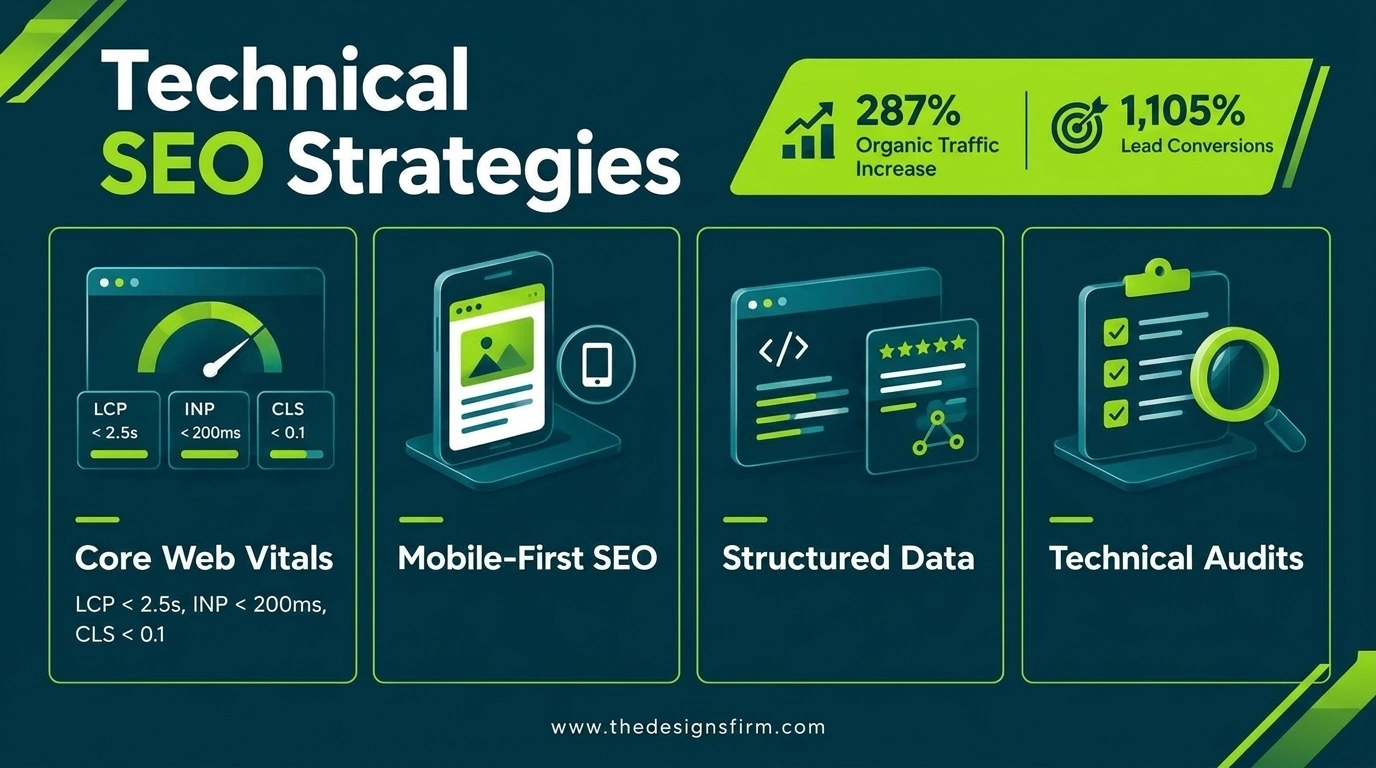
- LCP: loading performance — aim for 2.5 seconds or less
- INP: responsiveness — aim for less than 200 milliseconds
- CLS: visual stability — aim for less than 0.1
At our agency, we use these metrics as part of a wider page experience analysis.
We may work on:
- Image optimization
- Browser caching
- JavaScript reduction
- CSS optimization
- Server response time
- Hosting performance
- Lazy loading
- Font loading
- Layout stability
- Third-party scripts
However, we do not tell clients that getting a perfect PageSpeed score automatically means achieving higher rankings.
Google itself states that good Core Web Vitals are recommended for search success and user experience, but good scores alone do not guarantee top rankings.
Our goal is therefore to build a fast, stable, accessible, and useful website rather than chase a single technical score.
11. Prioritize Mobile-First SEO
Google uses the mobile version of a website’s content for indexing and ranking under mobile-first indexing.
This makes mobile usability a fundamental part of modern SEO.
At our agency, we check whether mobile users can:
- Read the content comfortably
- Navigate the website easily
- Access important information
- Use forms without difficulty
- Click buttons and links easily
- View images and media properly
- Complete important conversions
- Access the same essential content available on desktop
Mobile-first SEO is not simply about making a website “responsive”.
We also check whether the mobile version contains the same important content, structured data, links, metadata, and other critical SEO elements as the desktop version.
12. Implement Structured Data Where Appropriate
Structured data helps search engines understand the content and purpose of a page.
Depending on the website, we may implement appropriate schema types for:
- Products
- Organizations
- Local businesses
- Articles
- Events
- Breadcrumbs
- Reviews
- Courses
- Other supported content types
However, structured data does not guarantee that Google will display a rich result.
We implement schema that accurately represents the visible content on the page and follows Google’s structured data guidelines.
Our technical SEO team also reviews existing schema to identify duplication, incorrect properties, outdated markup, and schema that does not match the actual page content.
13. Conduct Regular Technical SEO Audits
A website is not a static asset.
New pages are published, old pages are removed, redirects are added, plugins are installed, templates change, developers update code, and content teams modify URLs.
All of these changes can create SEO problems.
Our website SEO audit services can identify:
- Broken links
- 3xx redirect chains
- 4xx errors
- 5xx errors
- Duplicate content
- Duplicate metadata
- Canonical issues
- Indexing problems
- Orphan pages
- Crawlability issues
- Robots.txt problems
- XML sitemap issues
- JavaScript rendering problems
- Missing or incorrect schema
- Pagination problems
- Internal linking issues
- Thin or low-value pages
We use tools such as Google Search Console, Screaming Frog, Ahrefs, Semrush, and other specialized tools alongside manual checks.
Our priority is not to fix every warning simply because an SEO tool reports it. We prioritize issues according to their potential impact on crawling, indexing, rankings, user experience, and business goals.
Advanced and Emerging SEO Strategies
SEO continues to evolve as search engines become more sophisticated and users increasingly interact with AI-powered search experiences.
At The Design Firm, we monitor these changes while continuing to focus on the fundamentals that make websites useful and discoverable.
14. Optimize for User Experience
Good SEO should result in a good experience for the person visiting the website.
At our agency, we look at UX from both the SEO and conversion perspective.
This includes:
- Clear navigation
- Logical page structure
- Readable typography
- Strong visual hierarchy
- Fast page loading
- Mobile usability
- Clear calls to action
- Easy-to-use forms
- Accessible important information
- Minimal distractions
- Clear product and service information
We do not rely on outdated concepts such as “dwell time” or “pogo-sticking” as straightforward Google ranking signals.
Instead, we focus on whether users can successfully accomplish what they came to the website to do.
For a service business, that could mean understanding the service and submitting an enquiry. For an e-commerce website, it could mean finding a product, comparing options, and completing a purchase.
SEO and conversion optimization should therefore work together.
15. Build Topical Authority and Optimize for Modern Search
Instead of creating isolated pages for every keyword variation, we help businesses build meaningful coverage around important topics.
This can involve developing:
- Pillar pages
- Supporting articles
- Service pages
- Product pages
- FAQs
- Case studies
- Industry resources
- Expert guides
- Internal links between closely related pages
The objective is not to publish hundreds of pages simply to increase keyword coverage.
We focus on creating useful pages that each serve a clear purpose.
This approach is becoming even more important as search engines increasingly understand topics, entities, relationships, and context.
SEO for AI Overviews and AI Mode
Search is also changing through AI-powered experiences such as Google AI Overviews and AI Mode.
The good news is that businesses do not need to abandon traditional SEO to appear in these experiences.
Google’s current guidance states that existing SEO best practices remain relevant for AI features. There is no separate “AI schema” or secret optimization technique that guarantees inclusion.
At our agency, we therefore focus on:
- Original and useful information
- Strong technical accessibility
- Clear website structure
- Relevant internal links
- Accurate structured data
- First-hand expertise
- Original research and insights
- Text, images, and other useful media
- Content that directly satisfies user needs
Google’s 2026 guidance specifically emphasizes valuable, unique, non-commodity content for generative AI experiences.
This means businesses should focus less on trying to “game” AI search and more on becoming a genuinely useful source that search engines and users have a reason to reference.
How We Develop a Winning SEO Strategy for You
A list of SEO strategies is one thing; implementing them as a cohesive growth plan is another.
At The Design Firm, we do not believe in a one-size-fits-all SEO strategy.
Our process begins with a comprehensive analysis of your:
- Business model
- Target audience
- Products and services
- Competitors
- Existing website performance
- Organic traffic
- Keyword visibility
- Search intent
- Technical SEO
- Content quality
- Backlink profile
- Conversion opportunities
We then create a prioritized SEO roadmap.
Rather than attempting to fix everything simultaneously, we identify the areas with the strongest potential for improvement.
Our SEO process typically includes:
1. SEO Audit
We combine automated tools with manual analysis to identify technical, on-page, content, and off-page opportunities.
2. Competitor Analysis
We analyze competing websites to understand their keyword coverage, content strategy, backlink profile, website architecture, and search visibility.
3. Keyword Research
Our SEO experts identify commercially valuable keywords and group them according to search intent and relevance.
4. Keyword Mapping
We map target keywords to the most appropriate existing or new pages to minimize cannibalization and create a clear site structure.
5. On-Page Optimization
We optimize important pages including titles, headings, content, internal links, images, URLs, metadata, and other relevant elements.
6. Technical SEO
Our technical SEO services focus on crawling, indexing, redirects, canonicalization, site architecture, Core Web Vitals, mobile usability, structured data, and other technical factors.
7. Content Strategy
We identify content gaps and opportunities where useful resources can attract qualified search traffic and support commercial pages.
8. Authority Building
We work on relevant backlinks, digital PR, brand mentions, outreach, and other legitimate authority-building opportunities.
9. Conversion Optimization
Traffic alone is not our final objective. We also look at whether organic visitors are taking meaningful actions such as submitting forms, calling, purchasing, booking, or requesting information.
10. Measurement and Continuous Improvement
We monitor rankings, clicks, impressions, organic traffic, conversions, leads, revenue, and other KPIs. SEO is an ongoing process, so we use performance data to refine the strategy over time.
Real-world case studies demonstrate why this holistic approach matters.
For example, a Search Engine Journal case study of the Orlando Economic Partnership reported a 287% increase in organic web traffic, 10,600 organic keywords, and a 1,105% increase in lead conversions after a major multi-site SEO and website project.
In another Semrush case study, Voe Tranquilo reported 588% organic traffic growth, a 66.5% reduction in customer acquisition cost, and a 47% increase in year-over-year revenue after a year of SEO and content marketing work.
These figures are case-study results, not promises of identical performance. Every website has different competition, resources, market demand, technical conditions, and conversion economics.
That is exactly why we build customized SEO strategies rather than selling the same checklist to every client.
Conclusion
The SEO fundamentals continue to evolve, but they remain remarkably consistent.
Successful SEO requires more than adding keywords or building a large number of backlinks. It requires a combination of useful content, strong technical foundations, relevant internal linking, genuine authority, good user experience, and continuous analysis.
At The Design Firm, we focus on developing SEO strategies that align with your business goals.
We help businesses identify valuable search opportunities, create useful content, improve technical performance, strengthen online authority, and turn organic visibility into meaningful business results.
Whether you are looking for web design and development services to launch a new website, trying to recover lost rankings, expanding into new markets, or looking to generate more qualified leads through organic search, our top SEO agency can develop a strategy tailored to your business.
Our goal is simple: to build sustainable organic growth that delivers value beyond rankings.